
Tires are one of the highest-cost and most critical safety components for commercial trucks. Operating under heavy loads, long-distance travel and harsh road conditions, truck tires are prone to abnormal wear. Mastering tire wear rules helps fleet managers cut operating costs, avoid roadside failures and extend tire service life.
1. Common Tire Wear Patterns and Core Causes
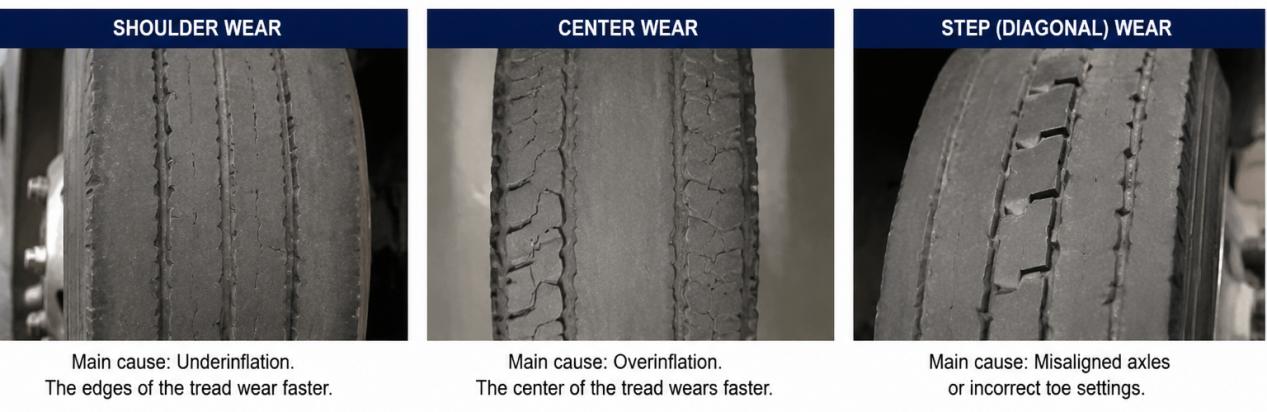
- Shoulder Wear (Both Sides): Faster wear on tread edges. Caused by underinflation, which leads to excessive sidewall flexion and heat accumulation, common on drive axles.
- Center Wear: Rapid wear of the tread center rib. Caused by overinflation, which narrows the tire's ground contact area and reduces traction.
- Step (Diagonal) Wear: Step-like uneven wear on tread blocks. Mainly resulting from axle misalignment and incorrect toe settings, frequent on steer tires.
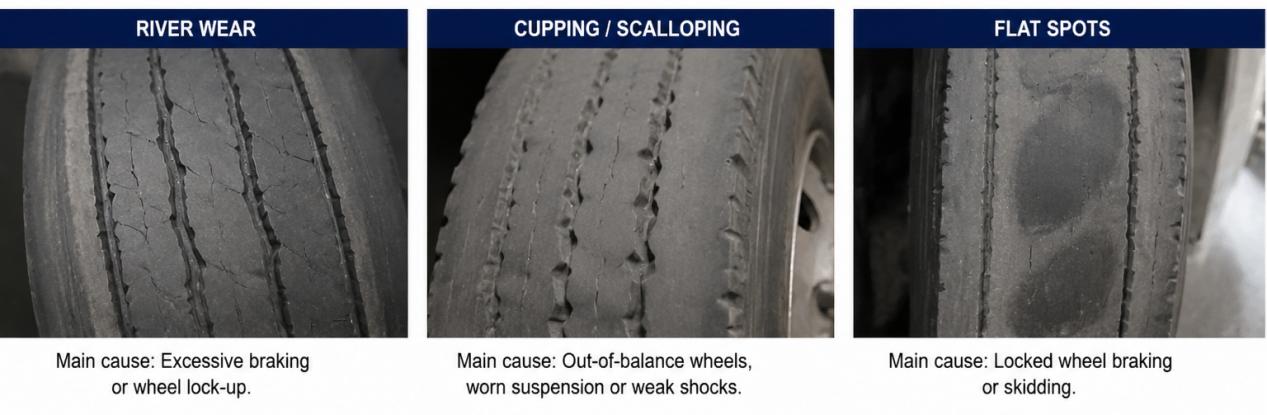
- River Wear: Diagonal groove wear on treads. Caused by harsh braking or wheel lock-up, mostly seen on trailer tires.
- Cupping / Scalloping: Wavy irregular tread dents. Triggered by unbalanced wheels, worn kingpins or faulty shock absorbers.
- Flat Spots: Localized flat tread areas. Caused by locked-wheel emergency braking or tire skidding on slippery roads.
2. Main Causes of Premature Tire Wear
Incorrect inflation pressure is the leading cause of abnormal tire wear. Underinflation causes shoulder wear and heat damage, while overinflation leads to center wear and impact damage.
Other key factors include minor axle misalignment (reducing tire life by 20–30%), uneven load distribution, poor wheel balance, and mechanical faults such as worn suspension parts and damaged wheel bearings. In addition, aggressive driving behaviors and irregular tire inspection and rotation will also greatly accelerate tire wear.
3. Core Preventive Maintenance Practices
- Daily Inspection: Check cold tire pressure before each trip per load-based standards, not just the tire's maximum pressure mark.
- Regular Alignment & Balancing: Conduct axle alignment every 6 months or 80,000 km (especially after hitting curbs or potholes); balance steer tires regularly and service drive/trailer tires if vibration occurs.
- Tread & Rotation Management: Monitor tread depth closely (replace tires before dropping to the 1.6mm legal limit); rotate tires every 50,000–80,000 km according to tire positions and wear conditions.
- Smart Monitoring & Driver Training: Equip fleet vehicles with TPMS to detect slow leaks and abnormal temperature changes; train drivers to adopt smooth driving habits to reduce tire loss.

4. Tire Retirement Standards
Tires must be immediately removed from service under the following conditions: tread depth below local legal limits; visible damage including sidewall cuts, bulges and exposed steel cords; excessive safe repairs; service life over 5–6 years (rubber aging and performance degradation); steel belt separation and wavy tread deformation.
Conclusion
Abnormal truck tire wear affects fleet fuel economy, vehicle availability and driving safety. By standardizing inflation management, regular mechanical inspections and scientific maintenance schedules, fleet owners can effectively reduce tire costs, extend tire service life and improve overall operational safety and efficiency.