
When choosing truck tires, it is easy to assume that a wider tire will automatically provide stronger grip and safer handling. A larger tread may appear to create more contact with the road, but tire performance is influenced by many factors beyond width alone.
For commercial vehicles, selecting the appropriate tire specification is usually more important than simply choosing a wider option.
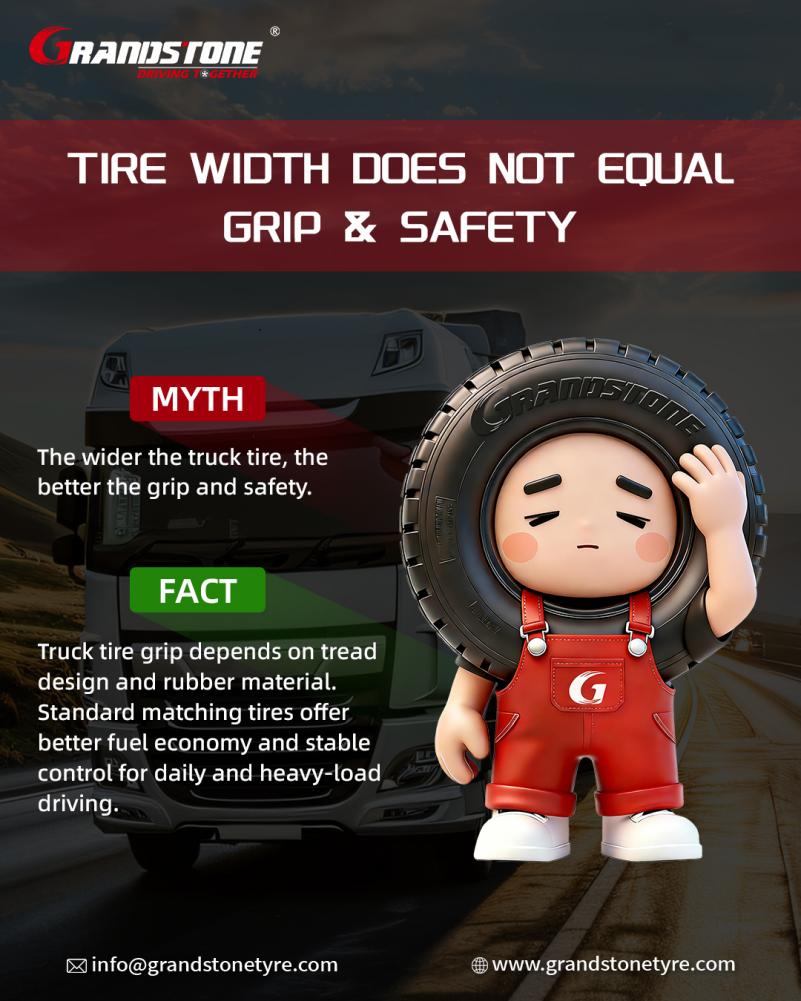
Tire Width Is Only One Part of the Equation
Tire width affects the shape of the contact patch, but it does not independently determine how much traction a tire can produce. The actual contact between the tire and the road is also influenced by vehicle load, inflation pressure, tire construction and operating conditions.
A wider tire may offer certain handling advantages when it is correctly matched to the vehicle. However, increasing the width without considering the rim, axle load and recommended specifications may affect steering response, rolling resistance, fuel consumption and overall driving stability.
Tread Design Influences Road Contact
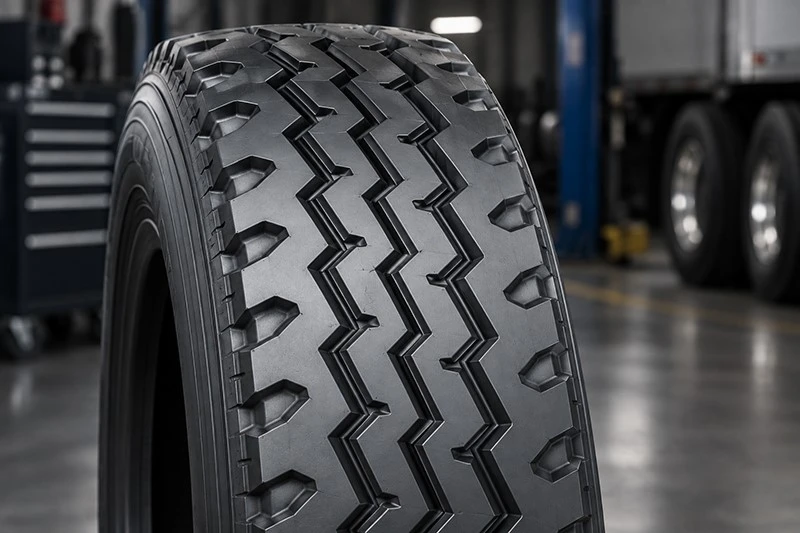
The tread pattern plays an important role in determining how a truck tire performs under different road conditions.
Longitudinal grooves can help maintain directional stability and channel water away from the contact area, while transverse grooves and tread blocks may provide additional traction for drive-axle applications. The arrangement, depth and stiffness of these elements all influence braking, cornering and wear performance.
This means that two tires of the same width may behave very differently if their tread patterns are designed for different axle positions, road surfaces or transportation requirements.
Correct Inflation Pressure Is Essential
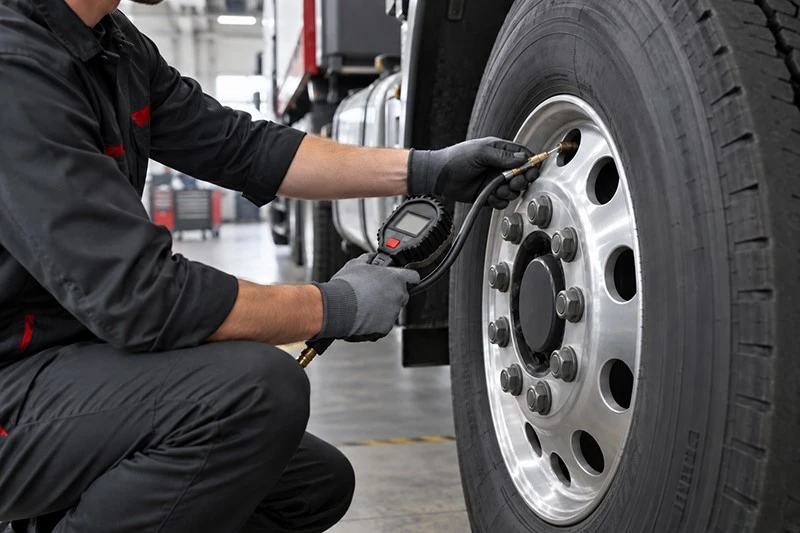
Even a properly selected tire cannot perform as intended if the inflation pressure is incorrect.
Underinflation may cause excessive flexing, increased heat buildup, irregular wear and higher rolling resistance. Overinflation can reduce the tire's ability to absorb road impacts and may concentrate pressure within a smaller part of the tread.
Truck operators should check tire pressure regularly and adjust it according to the tire manufacturer's recommendations, vehicle load and operating requirements.
Wider Tires Are Not Suitable for Every Situation
Wider tires may be useful in applications that require specific load distribution or handling characteristics, but they can also introduce trade-offs.
On wet roads, tread design and water evacuation capacity remain especially important. A wider footprint without suitable drainage channels may not necessarily improve wet-road performance. Wider tires may also increase rolling resistance or require different rims and vehicle clearances.
Any change in tire size should therefore be evaluated carefully to ensure compatibility with the vehicle and its normal operating conditions.
How to Choose the Right Truck Tire
When selecting truck tires, operators should consider:
- The tire sizes approved by the vehicle manufacturer
- Axle position, including steer, drive and trailer applications
- Load capacity and operating inflation pressure
- Highway, regional, urban or mixed-road use
- Tread pattern and tire construction
- Rim compatibility and available vehicle clearance
- Typical weather and road conditions
- Fuel efficiency, wear expectations and maintenance practices
- A properly matched tire helps support stable handling, predictable wear and efficient vehicle operation.
The Right Match Matters More Than Extra Width
A wider truck tire does not automatically mean better grip or greater safety. Reliable performance comes from the combined effect of suitable dimensions, tread design, tire construction, inflation pressure, vehicle load and operating environment.
Rather than focusing on width alone, fleets and drivers should choose tires according to the vehicle manufacturer's specifications and actual transportation needs. Correct tire selection, combined with regular pressure checks and maintenance, provides a more practical foundation for safe and stable operation.